






Intermediate
What did Jane Austen Write?
Discover the author’s witty and insightful tales of love and marriage in 18th century England.

Fans of costume dramas probably know her best from the many film and TV adaptations of her work. Book lovers who enjoy tales of Regency society will have no doubt read at least one of her novels.
The author Jane Austen is probably better known to modern readers than to British people who lived when she was alive. Although she did achieve some success during her lifetime, the level of fame which she has today didn’t come about until after her death. This is because she published her books anonymously.
Born in Steventon in Hampshire on the 16th of December 1775, Austen grew up in a time when the ideal roles for a women were wife and mother. Being a full-time author was not considered a feminine thing to do. Becoming a literary celebrity was not the done thing for ladies so female writers kept their identity concealed.
Her first book Sense and Sensibility, which was published in 1811, was described as being written ‘by a lady’. She published three more books in her lifetime. These included Pride and Prejudice, Mansfield Park and Emma. Their covers told readers that they were written ‘by the author of Sense and Sensibility.’ Two more books, Northanger Abbey and Persuasion were published a year after her death.
It was only when her books were published as a set that her name appeared and people became more aware of her. These days she is one of the most famous British writers. Known for her use of irony, realism and social commentary, Austen wrote books which continue to be read by many people.
For learners of English, her books are available as graded readers.
LISTEN TO THIS ARTICLE
WORDS & EXPRESSIONS
costume drama, noun [C], a play or film set in the past, in which the actors wear clothes that are typical of the time
adaptation, noun [C], a film, television drama or play that is based on a particular book or play but has been changed
Regency, adjective, the period of British history from 1811–1820
no doubt, expression, used when you are saying that something is likely
come about, phrasal verb, to happen
anonymously, adverb, by somebody who does not want their name to be known
feminine, adjective, having the qualities or appearance considered to be typical of women
literary, adjective, connected with literature
the done thing, expression [British], the way of behaving or doing something that is socially acceptable
conceal, verb, to hide something
irony, noun [U], the funny or strange aspect of a situation that is very different from what you expect
realism, noun [C], shown or described as they are in real life
commentary, noun [C], a criticism or discussion of something
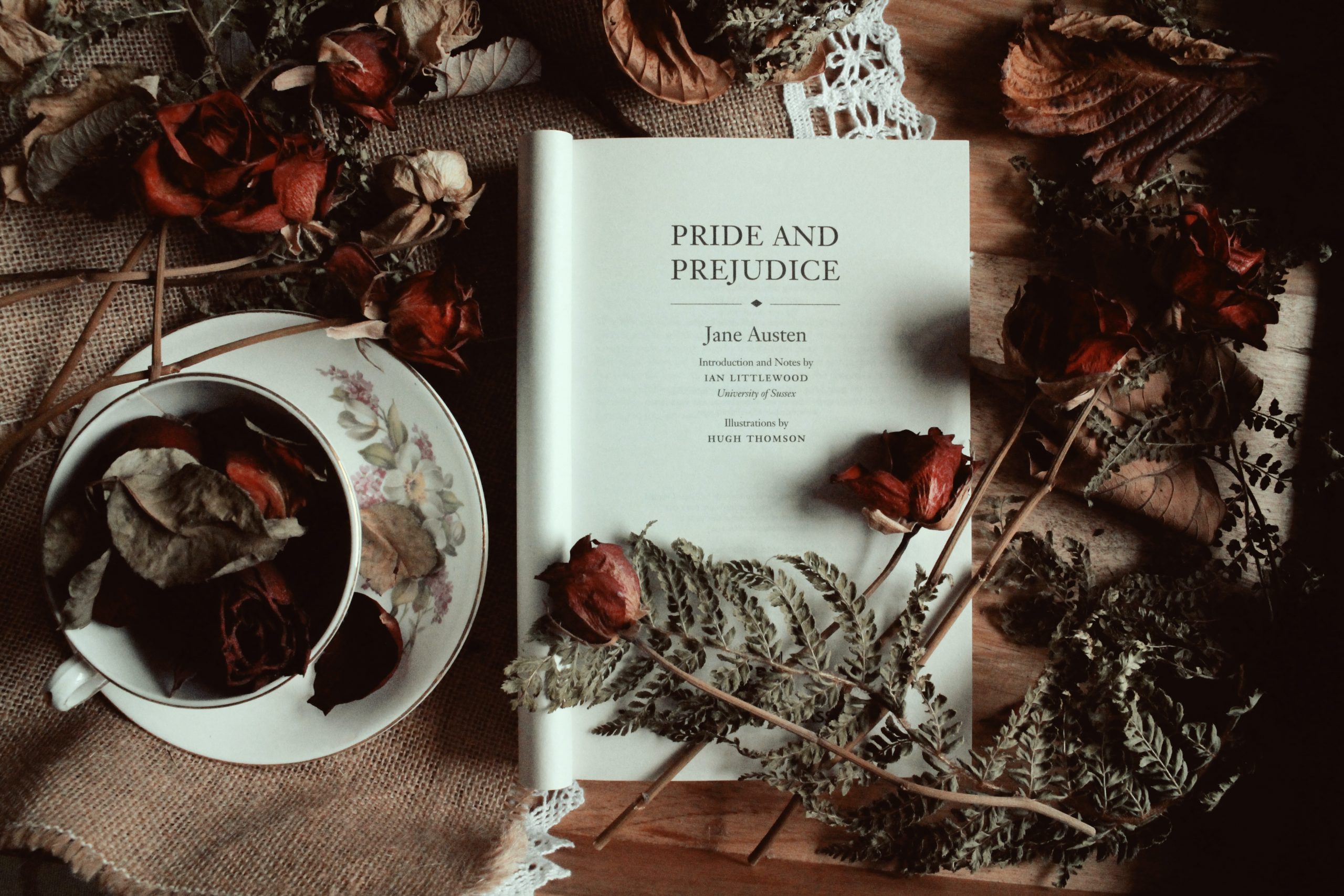
Photo by Elaine Howlin on Unsplash